Tile Mahjong Classic
- 4.8
- Rating
- 100.00K
- Installs
- Free
- Price
 Analysis by App-foxy
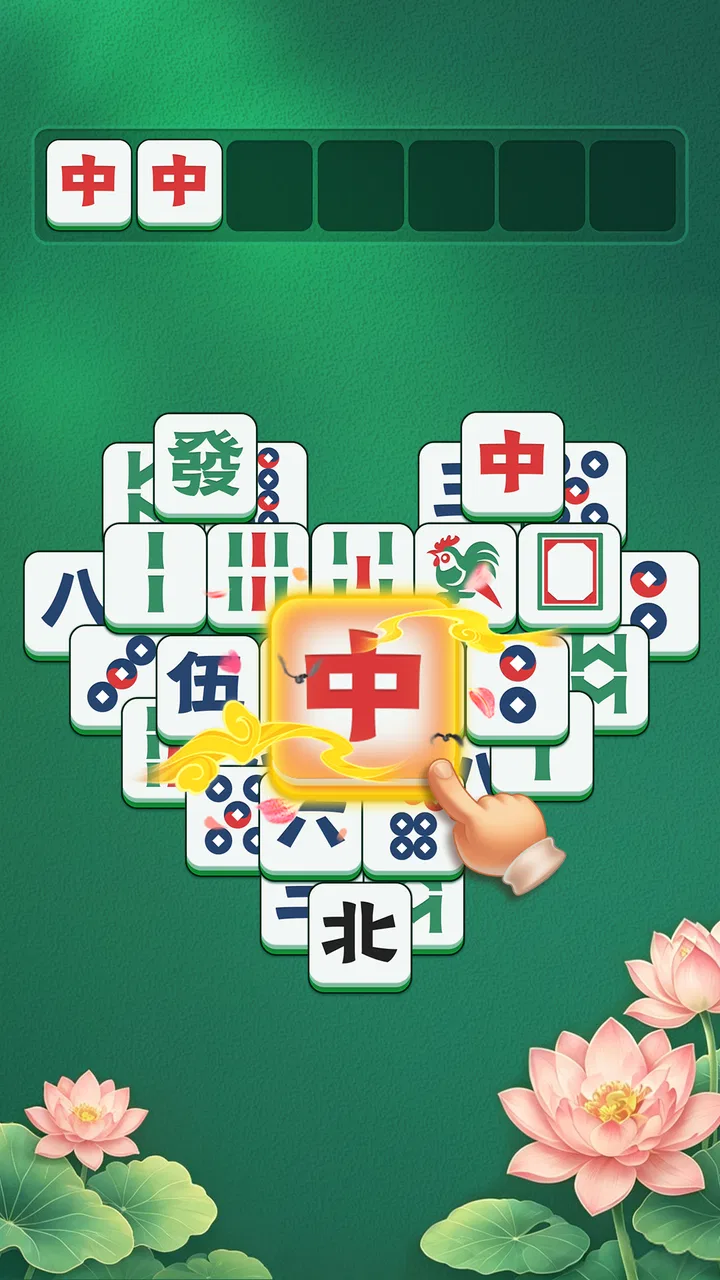
I spent time with Tile Mahjong Classic as a quiet, casual puzzle rather than a game built around speed, competition, or constant rewards. That distinction matters. Its appeal is the simple rhythm of finding matching tiles, clearing the board, and starting another layout when I want a short mental break. The presentation fits the idea of a traditional Mahjong solitaire experience, while the ability to play offline makes it especially convenient for moments when I do not want to depend on a connection.
At its best, this is the kind of game I can open without preparation. I do not need to remember a complicated story, learn a large control scheme, or commit to a long session. I can play while waiting for an appointment, during a quiet evening, or as a gentle way to reset my attention after work. The game is aimed at adults and seniors, and I can see why: the central action is familiar, readable, and easy to understand. Still, it is not only for older players. Anyone who enjoys tile-matching puzzles and a slower pace may find it comfortable.
How the basic play loop feels in everyday use
The main routine is straightforward: inspect the arrangement, identify two available matching tiles, select them, and continue until the board is cleared or no useful move remains. That simplicity is a strength because it leaves room for observation. I am not juggling several objectives at once. My attention stays on which tiles are exposed, which pairs are blocking the most important layers, and whether a tempting match will make the next few moves harder.
You May Also Like

 AccuWeather: Weather Radar
AccuWeather Review: A Quick, Clear Forecast for Everyday Decisions
For everyday plans, the best forecast is the one you can understand quickly. AccuWeather makes rain timing, radar, and local conditions easy to act on, with a few trade-offs.

 Hill Climb Racing
Why Hill Climb Racing Still Turns Crashes Into One More Run
A tiny car, a bumpy hill and one more upgrade: Hill Climb Racing keeps resurfacing because its simple chaos makes every near-miss feel personal.

 AliExpress - Shopping App
AliExpress Makes Global Shopping Feel Personal, but Shoppers Bear the Risk
AliExpress turns a global marketplace into a pocket-sized discovery engine. Its reach is useful, its shopping loop compelling, and its trade-offs easy to miss.

 Lords Mobile: Kingdom Wars
Lords Mobile Is a Kingdom-Building Routine, Not a Quick Match
A case-by-case verdict on the building, battles, device demands, and social commitments that make Lords Mobile rewarding for some players and exhausting for others.

 PDF Scanner app - TapScanner
TapScanner Makes Paperwork Easier to Capture, Check, and Share
TapScanner makes scanning with a phone feel less like a rescue operation and more like a dependable step in getting work done. Its capture tools are useful, though not flawless.

 Block Blast!
 Shows How Much a Puzzle Game Can Leave Out
A quiet grid game shows why puzzle players increasingly value instant clarity, repeatable skill and low-pressure play—and where the genre still needs to catch up.
More From Our News Desk
View All News


My preferred way to play is to pause before making the first move. Instead of immediately removing the most obvious pair, I scan the board for tiles that are stacked, surrounded, or likely to become useful after one side is opened. This small habit makes the experience feel less random. It also turns a very approachable casual game into a modest exercise in planning. The game is easy to pick up, but clearing a layout consistently still rewards patience.
A realistic everyday session might look like this: I have a few minutes before leaving home, open the game, and begin with a quick visual sweep. I remove a safe pair, reassess the newly exposed tiles, and avoid rushing simply because the next match is visible. If I need to stop, the offline format is useful because I can play in places where mobile data is unreliable or unavailable. That makes it more practical than a puzzle that expects a constant connection for its basic experience.
The controls are naturally suited to touch screens. Matching tiles generally requires recognition more than dexterity, so the game does not ask for rapid tapping or precise gestures. That is good news for players who want a relaxed experience, although the quality of a session still depends on how clearly the tiles can be distinguished on the device being used. On a smaller screen, I would take a little more time with crowded arrangements rather than tapping quickly and hoping I selected the intended tile.
One useful mindset is to treat every move as both a match and an information-gathering step. Removing a pair changes the visible structure, so the result is not only progress but also a clearer view of what was hidden. I find this approach more reliable than trying to solve the entire board in my head at the beginning. It also keeps the game calm: I am making a sequence of manageable decisions instead of searching for one perfect opening.
Small settings checks that improve comfort
Before settling into regular play, I recommend checking the available in-game options rather than assuming the default setup will suit everyone. With a tile puzzle, comfort is not a minor detail. The difference between clearly recognizing symbols and repeatedly second-guessing them can change the whole experience. I pay attention to how the board is displayed, whether the sound is appropriate for the place I am playing, and whether any assistance or presentation controls are available in the current version.
This is particularly important for adults and seniors who may prefer a slower, less visually demanding session. I would test the game in both bright and dim surroundings, because a layout that looks clear in one room may be less comfortable in another. I also prefer to keep device brightness at a level that makes tile edges easy to follow without making a short puzzle session unnecessarily tiring.
Sound is another setting worth considering. I often play casual puzzles in shared spaces, so I like having the option to keep the experience quiet when necessary. When I am at home, gentle audio can help create a more relaxing routine, but it should support concentration rather than compete with it. If you plan to play during travel or in a waiting room, checking the audio behavior before starting is a simple way to avoid interruptions.
Because the game is free to download, it is easy to try without making an immediate purchase. The store lists optional in-app purchases ranging from $0.99 to $44.99 per item, so I would review any purchase prompt carefully and decide in advance whether I want to spend anything. For me, the most comfortable approach is to treat the core game as a free trial of the experience and avoid buying automatically just because I am stuck on a layout.
That spending point is more relevant in a puzzle game than it may first appear. A player who enjoys solving boards may prefer to accept an occasional failure and learn from it, while another player may value convenience more highly. Neither approach is wrong, but I would not let a difficult moment push me into an unplanned purchase. The game works best when the session remains relaxing rather than becoming a test of patience or spending.
Repeatable habits for finding pairs more efficiently
Experienced play is less about tapping faster and more about reading the board in a consistent order. I begin by locating tiles with limited access. A tile that can only be removed from one side, or that is buried beneath several others, deserves attention because it affects future choices. I then compare those blocked areas with open pairs. An open match is useful, but it may be even more useful to remove a pair that exposes a difficult section.
Another habit is to avoid consuming every easy match immediately. If two identical tiles are both freely available, I consider whether one of them is helping me judge the position of another group. Leaving a harmless option in place for a moment can preserve flexibility. This is a small trade-off: clearing tiles feels satisfying, but keeping choices available can be more valuable than reducing the visible count as quickly as possible.
I also use a two-pass scan. On the first pass, I look for obvious pairs and note where they sit. On the second, I check whether one of those pairs is blocking a more important tile or whether removing it would create a narrow set of choices. This prevents the common mistake of selecting the first match that catches the eye. It is a simple routine, but it makes the game feel more deliberate without making it stressful.
When several matches are available, I favor the move that opens the greatest amount of information. In practical terms, that usually means looking for a pair positioned over a crowded section or beside a tile that has few routes to freedom. I do not assume this will always be the perfect decision, because the best move depends on the arrangement in front of me. The useful principle is to value future visibility, not just immediate removal.
For players who find the symbols difficult to separate, I suggest identifying the tile family first and the exact match second. I look at the broad visual group, then compare the details. This reduces the strain of searching the whole board at once. It is also a good reason to slow down on dense layouts: a rushed selection can create confusion that a few extra seconds would have prevented.
A final practical habit is to stop briefly after every meaningful pair. I use that pause to re-scan the newly exposed area instead of continuing with the plan I had before the board changed. This is especially useful when a single removal uncovers several tiles. The pause costs almost nothing, yet it helps avoid playing on autopilot.
Where the simple design becomes limiting
The same simplicity that makes this game approachable may disappoint players looking for a deeper package. If you want a strong competitive layer, a narrative campaign, character progression, or a large collection of unrelated mini-games, this is probably not the right choice. Its identity is the tile puzzle itself. I appreciate that focus, but I would not recommend it to someone who needs constant novelty or a sense of long-term advancement beyond completing layouts.
There is also a natural limit to how much strategy a familiar Mahjong solitaire format can provide. The decisions can be thoughtful, but they remain within a recognizable structure: expose tiles, preserve options, and clear matching pairs. After repeated sessions, some players may feel that the routine becomes predictable. I experienced that as soothing during short breaks, but I can understand why a player who prefers demanding logic puzzles might eventually want something more complex.
Offline play is a practical advantage, yet it also means the game fits best into a self-contained routine. I would choose it for a flight, a commute with uncertain reception, or a quiet screen-free-feeling break that still uses a phone. I would choose a connected puzzle community instead if my main motivation were comparing results, sharing progress, or interacting with other players. The right option depends on whether solitude or social competition is what I want from the session.
The free price lowers the barrier to trying it, but the optional purchases deserve sensible handling. Players who are comfortable with a completely free experience should be prepared to ignore purchase prompts if they appear. Those who enjoy supporting a game or using paid conveniences may see value in the available items, but I would first spend enough time with the basic loop to decide whether the game genuinely earns a place in my routine.
Device support is also worth noting. The game requires Android 6.0 or later, so it is accessible to many older Android devices, although actual comfort will still depend on screen size and display clarity. I would be more cautious on a very small phone if reading tile details is difficult. On a larger screen, the visual inspection that makes the puzzle enjoyable should feel more natural.
Who will enjoy it most
I think this is a strong fit for someone who wants a calm, familiar puzzle with no need for an internet connection. It works well for adults who enjoy short sessions, seniors who prefer a straightforward interface, and casual players who want to exercise attention without learning elaborate rules. It can also suit people who use games as a wind-down ritual: a few boards after dinner, a quiet break between tasks, or a gentle activity before bed.
It is less suitable for players who need a clear competitive target every time they open a game. If leaderboards, timed challenges, elaborate rewards, or multiplayer interaction are essential to your enjoyment, the focused design may feel too restrained. Likewise, if you want a puzzle that keeps introducing new mechanics, this one may be better as a secondary game than as your only casual download.
The developer is SOFISH GAMES, and the game has built a positive early audience, with a 4.8 average from around 188 ratings and more than 100K installs. Those figures suggest that the basic concept is connecting with many players, but I would still interpret them alongside personal preference. A highly rated relaxing puzzle can be a poor match for someone who wants action, while being exactly right for someone who wants a quiet board-clearing routine.
Its Everyone age rating also matches the accessible nature of the play. I would still guide younger children toward games designed specifically around their needs if they are using a device independently, but there is nothing about the central puzzle concept that requires mature themes. For families, the more relevant question is whether the child enjoys patient visual matching rather than fast reactions.
My verdict after building a regular routine
Tile Mahjong Classic works because it does not overcomplicate a format that already has a satisfying rhythm. I like opening it with a clear intention: one or two boards, a quiet break, and no pressure to chase a dramatic result. The offline capability makes it easier to fit into real life, while the touch-based matching keeps the barrier to entry low. The best sessions come from slowing down, scanning blocked areas first, and treating each removal as a chance to reveal better information.
The current version is 1.0.10, and the game was released on Feb 16, 2026. I mention that because prospective players may want to keep the app updated through their normal app-store process, especially when using a newly released casual title. My recommendation is not based on expecting a particular future feature; it is based on what the game already does well as a focused, offline-friendly tile puzzle.
My strongest advice is to try it with a repeatable method rather than judging it after a hurried first board. Check the display and audio settings, learn to prioritize blocked sections, and pause after each pair changes the layout. Those habits make the puzzle more readable and reduce the feeling that success depends on luck. They also reveal whether you actually enjoy the central rhythm, which is more important than any extra option.
Choose this game when you want calm concentration, familiar tile matching, and flexible offline sessions. Skip it when you need competition, story, or a steady stream of new mechanics. For my own casual gaming folder, it earns a recommendation as a dependable Mahjong solitaire option: not an ambitious all-purpose game, but a pleasant tool for turning a few spare minutes into a focused and relaxing break.
FAQs for Tile Mahjong Classic
01What is Tile Mahjong Classic and how does it differ from traditional Mahjong?
Tile Mahjong Classic is a digital adaptation of the traditional Mahjong game. Unlike the classic four-player game, this version is a solitaire matching game where players remove pairs of tiles from a stacked layout. The goal is to clear the board by matching open pairs of identical tiles, offering a more relaxed and solitary gaming experience.
02Is Tile Mahjong Classic available on both Android and iOS platforms?
Yes, Tile Mahjong Classic is available for download on both Android and iOS devices. Users can easily find it on the Google Play Store for Android and the Apple App Store for iOS devices, ensuring accessibility for a wide range of mobile users.
03Does Tile Mahjong Classic require an internet connection to play?
Tile Mahjong Classic can be played offline, making it a perfect choice for users who want to enjoy the game without needing an internet connection. This feature is especially useful for players who are on the go or in areas with limited connectivity.
04Are there in-app purchases in Tile Mahjong Classic?
While Tile Mahjong Classic is free to download, it does offer in-app purchases. These may include additional tile sets, hints, or the ability to remove ads. Players can choose to enhance their gaming experience, though these purchases are optional and not necessary to enjoy the game.
05What features make Tile Mahjong Classic a standout choice for Mahjong enthusiasts?
Tile Mahjong Classic offers a variety of features that appeal to Mahjong lovers, including multiple tile sets, varied layouts, and adjustable difficulty levels. The game also provides hints and undo options to assist players, making it accessible for both beginners and experienced players. Its clean interface and smooth gameplay further enhance the user experience.
Pros
- Simple
- intuitive interface for easy navigation.
- Wide variety of tile sets to choose from.
- Offline play available
- no internet needed.
- Smooth performance with minimal lag.
- Relaxing background music enhances focus.
Cons
- Limited hints can frustrate beginners.
- Ads can interrupt gameplay experience.
- No multiplayer options for competitive play.
- In-app purchases for additional features.
- Some levels may feel repetitive over time.

Tile Mahjong Classic
Gallery